
From 18 to 21 May 2026, join us for the 10th edition of our online course dedicated to the engineering design of pressure vessels and heat exchangers — delivered entirely in English.
This intensive programme features daily online sessions, with 3-hour morning classes and 3-hour afternoon classes, offering a comprehensive and highly practical learning experience.
The course focuses primarily on Design by Formulae (DBF) and provides an in-depth comparison of the most widely used international standards, including:
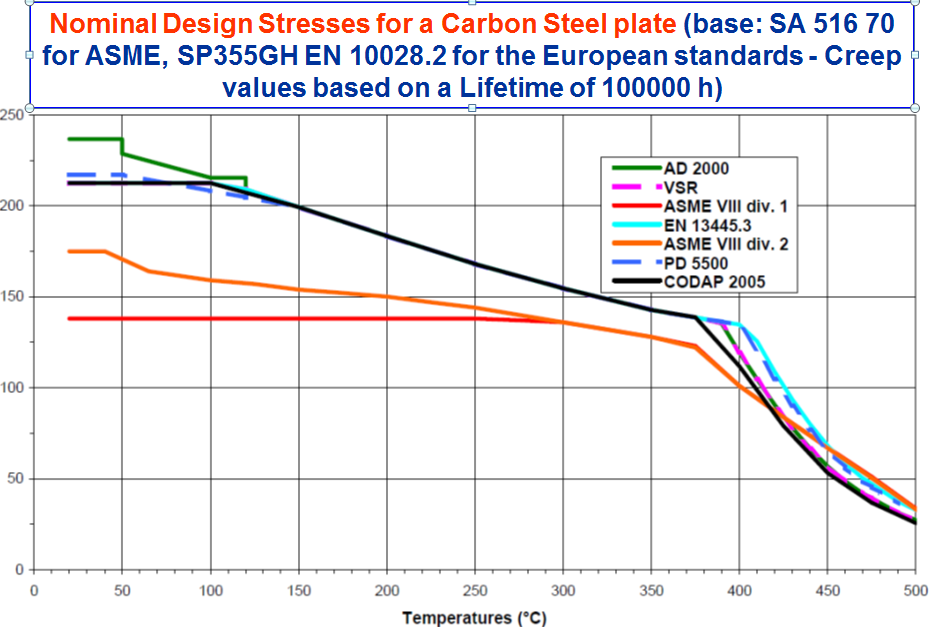
By examining the same components under identical design conditions across different codes, participants will clearly see how design methodologies — and resulting dimensions — can vary significantly.
We continuously update the course content to reflect the latest revisions of major Pressure Vessel codes, ensuring that participants receive up‑to‑date, industry-relevant knowledge.
Throughout the course, practical design examples will demonstrate key calculation procedures for complex components such as flanges, heat exchanger tubesheets, and saddles for horizontal vessels — highlighting how geometric optimization can dramatically reduce fabrication costs.
The purpose of the course is also to teach participants how to minimize the time needed for the design, which for manufacturers (particularly for those who usually have to make a preliminary design in order to prepare offers) may be very important to increase their competitiveness on the market.
In the course also elements of DBA (= Design by Analysis) are given, in order to put the participants under conditions to correctly assess a FEM analysis prepared by others, bearing in mind that such calculations (despite of the accuracy obtained in the calculation of stresses by means of the most popular FEM computer programs) may be completely misleading if the right failure modes were not considered by the software, or if the stress categorization was not correctly made by the designer.
The topics of the single lessons will be as follows:
Lesson 1 – GENERAL NOTIONS OF PRESSURE VESSEL DESIGN
Lesson 2A – MECHANICAL DESIGN FOR INTERNAL AND EXTERNAL PRESSURE
Lesson 2B – MECHANICAL DESIGN OF BOLTED FLANGE CONNECTIONS
Lesson 3A – THERMAL DESIGN OF SHELL & TUBE HEAT EXCHANGERS
Lesson 3B – MECHANICAL DESIGN OF SHELL & TUBE HEAT EXCHANGERS
Lesson 4A – PRESSURE VESSEL DESIGN FOR LOADS OTHER THAN PRESSURE
Lesson 4B – DESIGN FOR CYCLIC LOADS
The Speaker of the course is Dr. Fernando Lidonnici, European expert on pressure equipment design, who is the Coordinator of the European workgroup WG53/ CEN TC54, which developed the design part of EN 13445, ASME Member and President of EPERC (European Pressure Equipment Research Council). In 2018 he was awarded the Donald Julius Groen Prize from IMechE, the British Institution of Mechanical Engineers, for his activity in the field of European Pressure Vessel Norms.
Click here to open the course flier, which contains also the registration form, as well all details on the registration fees and participation conditions.
For any information on the course don’t hesitate to contact us (Mr. Bordoni at bordoni@sant-ambrogio.it )
 Azienda certificata ISO 9001
© 2026 Sant'Ambrogio Servizi Industriali // Piazza Carlo Donegani 8, I-20133 Milano // Tel. +39 02.70603113 // VAT: 09221480156 // credits


